Car detailing tips · Paint care
What is a decontamination wash? And how is it different from a normal exterior wash?
A normal wash removes the dirt you can see. A decontamination wash removes the dirt you cannot — the contamination that is bonded into the paint and makes it feel rough, look dull and refuse to hold a sealant. Here is exactly what it involves, and when you actually need one.
A decontamination wash in one paragraph
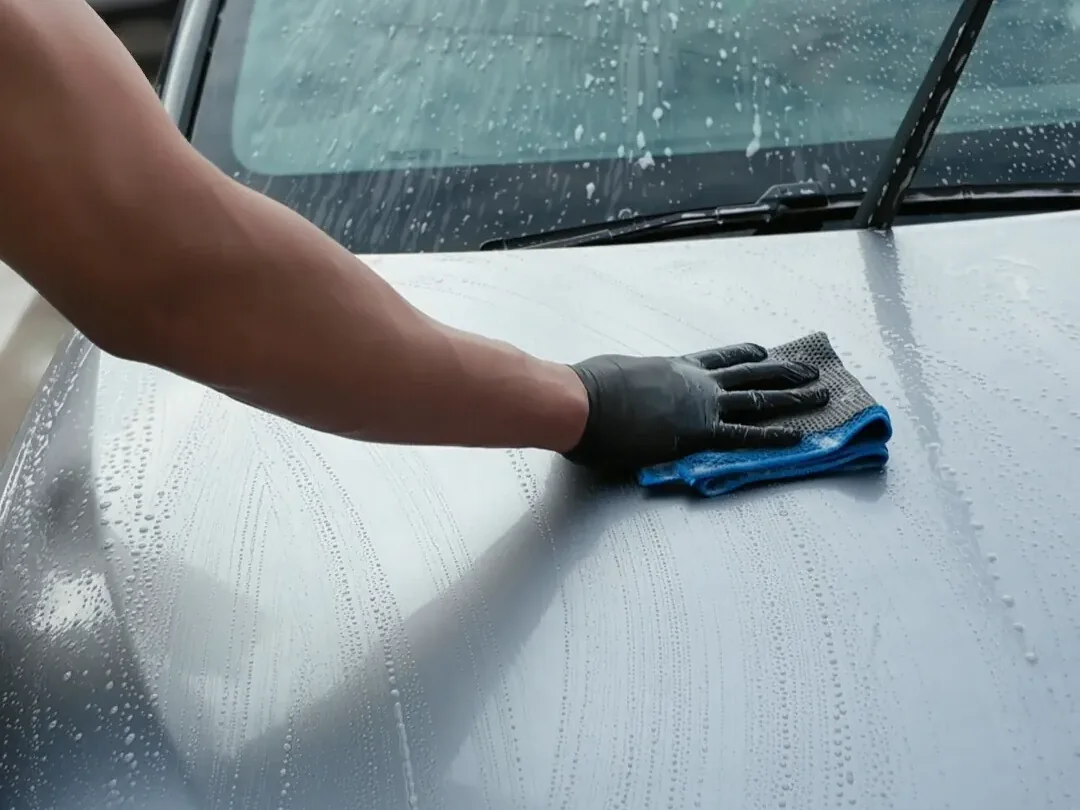
A decontamination wash is a wash with extra chemical and physical steps added after the normal clean. Where a normal exterior wash lifts loose dirt and road film, a decontamination wash goes after what is stuck: hard-water mineral deposits, iron particles from brake dust, tar, and embedded grime. Done properly, the paint ends up properly clean rather than just looking clean, and perfectly smooth to the touch.
What is a normal exterior wash?
The wash most people mean. Snow foam to loosen the dirt, a careful hand wash with clean mitts, a rinse, then drying with soft microfibres. At PureShine that is the Exterior Safe Wash from £40, with wheels, tyres and glass cleaned and a sealant for gloss on top.
It is the right thing for regular upkeep. A safe wash every few weeks stops dirt building up and does the car no harm. What it cannot do is remove anything that has bonded to the paint, because shampoo only dissolves what is sitting on the surface.
What is a decontamination wash, step by step?
Every decontamination wash starts the same way as a normal wash, then goes further. In the order we do it:
- Wheels, tyres and arches first. They are the dirtiest part of the car, so they are cleaned before any mitt touches the paint.
- Snow foam pre-wash. Thick foam clings to the paint and lifts road film so it can be rinsed away without scrubbing.
- Mineral deposit remover. Hard London water leaves mineral spots that sit in and on the paint and glass. A mineral deposit remover dissolves them, which a normal shampoo will not.
- Iron fallout remover. Brake dust is made of tiny hot iron particles that embed in paint and start to rust. The remover reacts with the iron and turns purple as it dissolves, so you can literally watch it work.
- Tar removal. Road tar spots, usually along the sills and behind the wheels, are dissolved rather than scrubbed.
- Safe two-bucket hand wash. With soft microfibre mitts, so everything loosened in the steps above is taken off safely.
- Clay treatment. A clay bar or mitt is glided over the lubricated paint and physically pulls out whatever is still embedded. This is the step that leaves the paint glass-smooth.
- Dry, then protect. Dried with plush microfibres, then sealed so the clean surface stays that way.
Decontamination wash vs normal exterior wash: the differences
Everything a normal wash does, a decontamination wash also does. The difference is the extra work that follows it.
| What gets dealt with | Normal exterior wash | Decontamination wash |
|---|---|---|
| Loose dirt and road film | Yes | Yes |
| Snow foam and hand wash | Yes | Yes |
| Hard-water spots and mineral staining | No | Yes, mineral deposit remover |
| Bonded iron from brake dust | No | Yes, iron fallout remover |
| Tar spots | No | Yes, tar removal |
| Embedded contamination you can feel | No | Yes, clay treatment |
| Paint left glass-smooth | No | Yes |
| PureShine services that include it | Exterior Safe Wash from £40, Signature Wash from £65 | Paint Refresh from £90, Full Detail from £210, The PureShine Detail from £310 |
How do you know if your car needs one?
There is a quick test. Wash and dry the car, put your hand in a thin plastic sandwich bag and glide it gently over the bonnet or roof. If it feels gritty or rough like fine sandpaper, there is bonded contamination in the paint that a normal wash will never shift. Smooth means you are in good shape.
Other signs: little orange or brown specks on white and silver cars (iron fallout), tar spots behind the wheels, white water marks on the glass and paint that looks dull straight after a wash.
Why does it matter?
- Sealants and coatings bond properly. Anything applied over contamination sits on the contamination, not the paint, and fails early. This is why decontamination comes before any sealant, wax or ceramic coating.
- Polishing is safer. Grit left in the paint gets dragged around by a machine polisher. Decontaminating first is part of doing it safely.
- Iron stops doing damage. Left alone, embedded iron slowly corrodes into the paint.
- The car looks cleaner for longer. A smooth surface has nothing for new dirt to grip.
How often do you need a decontamination wash?
For most cars, once or twice a year is plenty, usually as part of a yearly reset. Cars that sit outside under trees, near railway lines or do a lot of motorway miles can need it a little more often. It is not something to do every wash. The safe wash in between is what keeps the result going, and a prepaid membership takes care of that.
What a decontamination wash will not do
Straight talking, as ever. It will not remove scratches, swirl marks or stone chips. Those are damage to the lacquer, and need machine polishing or paint repair. Decontamination actually makes the polish step better, because the surface it works on is clean, which is why The PureShine Detail combines the two.
Which PureShine services include a decontamination wash?
- Paint Refresh & Protection from £90 — decontamination plus a ceramic spray sealant, no machine work. The cheapest way to get it done.
- Full Detail from £210 — the full interior deep clean, plus exterior decontamination and a 1-year sealant.
- The PureShine Detail from £310 — the Full Detail, finished with a single-stage machine gloss polish.
- The Gloss Enhancement, Single Stage + Ceramic and 2 Stage + Ceramic tiers all start with it.
The Exterior Safe Wash and the Signature Wash are safe maintenance washes and do not include it.
Not sure whether your paint needs it? Send us photos on WhatsApp and we will tell you honestly, including when a normal wash is all you need.
Ready for a properly clean car?
From a £40 safe wash to the full decontamination and polish, see exactly what each service includes and book in about a minute.