Car detailing tips · Protection
Ceramic coating vs wax vs sealant — which does your car need?
Three products that all make a car shiny and all do genuinely different jobs. Here is what each one actually is, and when paying for the expensive one is wasted money.
Ceramic coating vs wax vs sealant in one paragraph
Wax sits on your paint. A sealant bonds to it. A ceramic coating forms a hard layer over it. They get progressively thicker, harder and longer lasting, and progressively more expensive and more work to apply. That is genuinely the whole story — everything below is detail.
Wax
The starting point in any ceramic coating vs wax comparison. Natural carnauba, usually. It sits on top of the lacquer like a thin film and gives a warm, deep glow that a lot of people prefer on dark colours. It is the cheapest option and the easiest to apply.
It also melts. Carnauba softens with heat and washes away with strong shampoo, so realistically you are looking at six to ten weeks on a car parked outside in Britain — less in summer, oddly, because heat is what kills it.
Right for: show cars, weekend cars, anyone who genuinely enjoys waxing their own car a few times a year. Wrong for: a daily that you want to stop thinking about.
Sealant
Synthetic, and it chemically bonds to the lacquer rather than resting on it. Sharper and glassier looking than wax rather than warm, and far more durable — four to twelve months depending on the product and how the car is washed.
This is the sensible default for most cars, and it is what goes on at the end of a Full Detail. Good protection, good gloss, no enormous outlay, and it can be topped up easily.
Right for: most daily drivers, lease cars, anyone who wants protection without a big one-off spend. Wrong for: nobody, really. It is the safe answer.
Ceramic coating
The reason ceramic coating vs wax is not a fair fight. A liquid that cures into a hard, glass-like layer bonded to the paint. It is measured in microns rather than the nanometres a sealant occupies — the difference is not marginal, it is hundreds of times thicker.
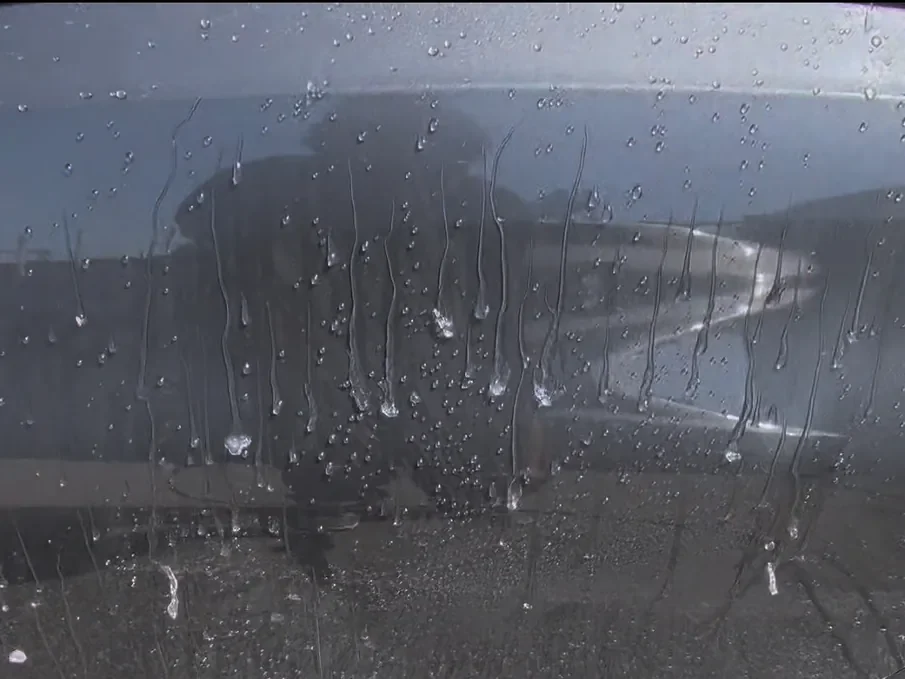
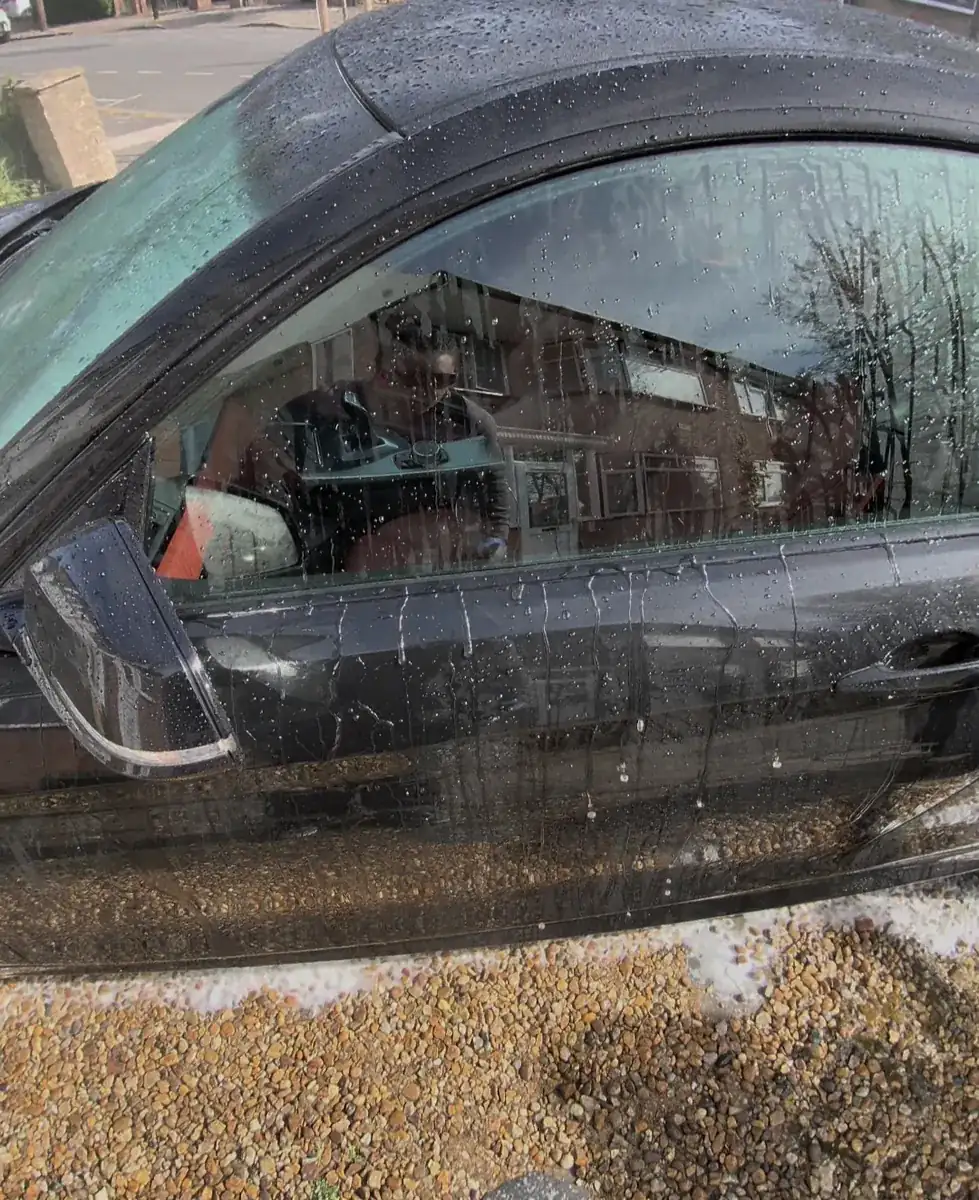
What you actually notice day to day is not the shine. It is that the car stops holding dirt. Rain sheets off, road film does not bond, bird mess and sap sit on the coating rather than on your lacquer so they lift off safely instead of etching. Washing the car gets quicker and safer, which matters far more over years than gloss does.
The catch is that it is unforgiving. Applied badly it leaves high spots that need machine polishing to remove, and it needs properly prepared paint underneath. Coating over swirl marks seals the swirl marks in.
Right for: cars you are keeping a few years, cars parked outside, anyone tired of the car looking filthy four days after a wash. Wrong for: a lease car going back in six months, or neglected paint you are not willing to correct first.
Ceramic coating vs wax — how long do they actually last?
Wax, six to ten weeks. Sealant, four to twelve months. A professional coating is measured in years.
I deliberately do not put a number of years on a coating, and I would be wary of anyone who does. A garaged weekend car and a daily parked under lime trees and washed in a supermarket car park are not going to get the same life out of the same product. What I will do is look at your car, tell you what to expect, and show you how to keep it there.
The thing that shortens coating life most is not weather. It is bad washing.
Does a ceramic coating mean you stop washing the car?
No, and this is the most common misunderstanding. A coating makes washing easier and safer. It does not replace it.
A coated car left dirty for two months still collects bonded contamination on top of the coating, and that dulls it. The owners who get years out of a coating are the ones washing regularly and gently. The ones disappointed at eighteen months are almost always the ones who treated the coating as permission to stop.
Ceramic coating vs wax — so what should you actually buy?
Keeping the car under a year? Sealant. In the ceramic coating vs wax decision this is the one case where neither is the answer — anything more is money you will not get back.
Two to three years, parked outside? Sealant, topped up, or step up to Paint Refresh & Protection at £130 — decontamination plus a ceramic spray, no machine work.
Keeping it longer, and the paint is in decent shape? This is where a coating earns its money. Single Stage Correction + Ceramic Coating from £360 takes the light swirls out first so the coating locks in a good finish rather than a damaged one.
Paint already swirled, and it is a car you care about? Two-stage correction first. Skipping it is the single most common way people waste money on a coating.
The bit most people get backwards
Arguing ceramic coating vs wax misses the point entirely. Protection is not what makes a car look good. Correction is.
Wax, sealant and coatings all add gloss and depth, but none of them remove a scratch — they make the surface they are sitting on look its best. If your paint is swirled, no amount of protection fixes that, and the shiniest coating in the world just makes the swirls easier to see in sunlight.
Get the paint right first, then protect it. Forget ceramic coating vs wax for a moment — in that order, a sealant on corrected paint beats a coating on neglected paint every single time.
Still weighing up ceramic coating vs wax for your own car? Send me daylight photos of the paint and I will tell you honestly — including when the cheaper option is the right one.
See what protection costs for your car
Past the ceramic coating vs wax question and ready to protect it properly? Four levels, from £130 paint protection to full two-stage correction.