Car detailing tips · Protection
What is a ceramic coating? How it works, how it is applied and what it really does
A ceramic coating is a liquid that cures into a hard, glass-like layer on your paint. Here is what that actually means for water, dirt, swirl marks, gloss and how long it lasts, in plain English and without the marketing.
What is a ceramic coating, in one paragraph
A ceramic coating is a professional-grade liquid, based on silica (the same compound as glass and quartz), that is wiped onto clean paint and then cures into a thin, hard, transparent layer. It bonds to the lacquer rather than sitting on top of it like wax. The coating does not make the paint stronger. It adds a sacrificial surface on top of it that is smoother, harder and far more resistant to water and dirt than the paint underneath.
Hydrophobicity: why water beads and rolls off
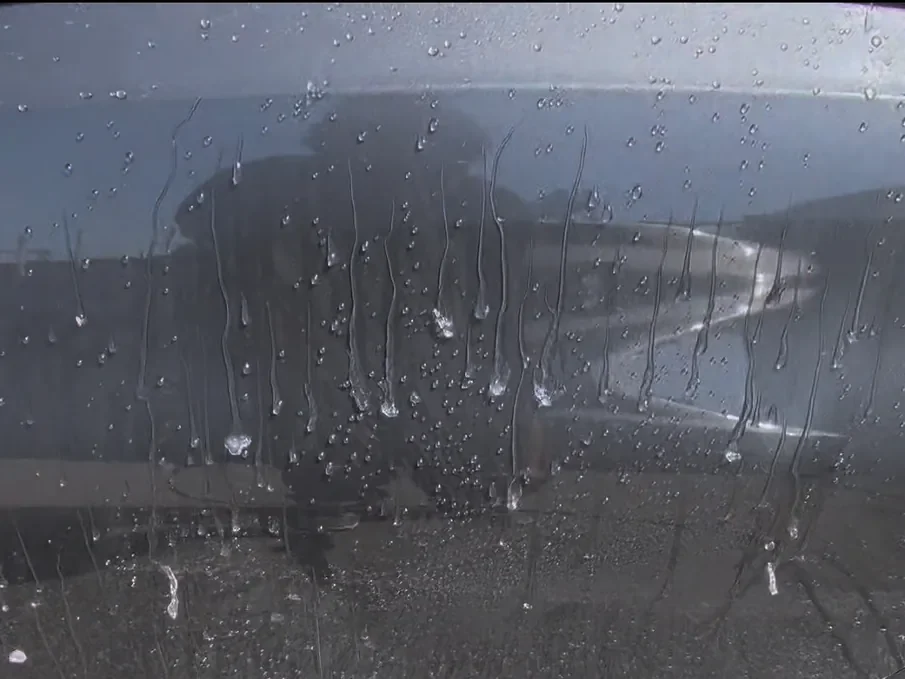
Hydrophobic simply means water-repelling. A coated surface has very low surface energy, so water cannot spread out and wet it. Instead it pulls itself into round beads.
The way to measure it is the contact angle: the angle between the edge of a water droplet and the surface it sits on. Under 90 degrees the water is spreading and the surface is wetting. Over 90 degrees the surface is hydrophobic. The higher the angle, the rounder and tighter the bead.
- Bare, dirty or sealed-and-tired paint: the water sits in flat, wide patches with a low angle.
- Fresh wax or sealant: good beading, but it fades as the layer wears.
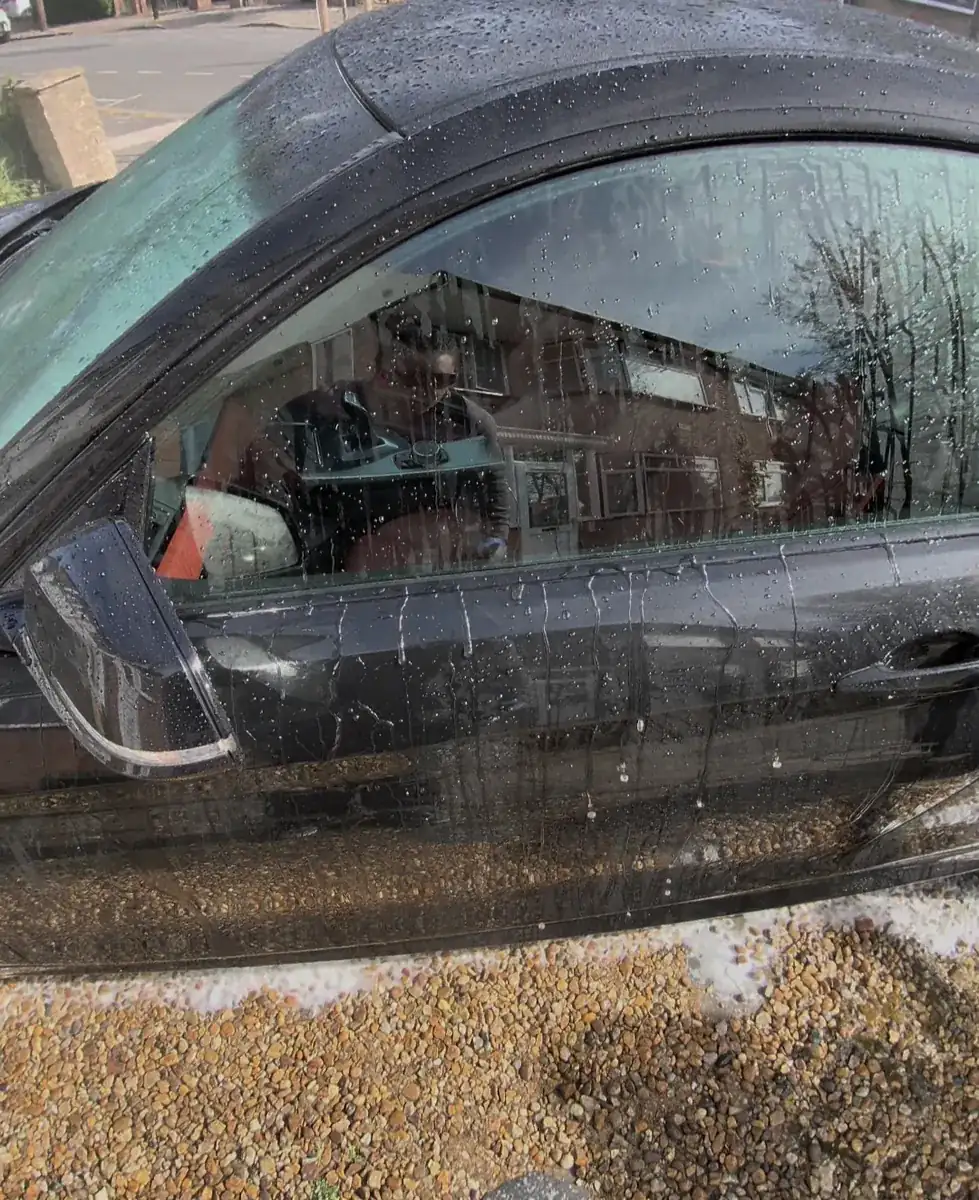
- Ceramic coating: tall, tight beads with a high contact angle, and sheeting that clears the panel as you drive.
Beading is the part everyone photographs, but it is only a symptom. The real benefit is what it does next.
How a ceramic coating helps keep your car cleaner
Dirt needs something to grip. On ordinary paint, road film, rain and traffic grime cling to a surface that is microscopically rough and takes on water. On a coated panel there is far less for them to hold on to. Rain runs off and carries loose dirt with it, and what does stick is on the coating, not the lacquer, so it lifts off in a wash with far less effort.
Three practical results:
- The car stays cleaner for longer between washes, especially in wet weather.
- Washing is quicker and gentler, which means less contact with the paint and fewer chances to put swirls in.
- Bird mess and sap are less likely to etch the lacquer, because they sit on the coating. They still need removing quickly. A coating buys you time, not immunity.
Slickness: why swirl marks and light scratches become less likely
A coated panel feels noticeably slick. Run a clean microfibre or your fingertips over it and there is almost no drag. That slickness is the quiet reason coated cars stay looking better, because most swirl marks come from washing and drying, not from anything dramatic. Less friction between the mitt or towel and the surface means less marring every time the car is touched.
It is worth being honest about the limit here, because this is where ceramic coating is most over-sold:
- It is not scratch-proof. A key, a rogue branch, a rushed hand wash with a dirty brush will still mark a coated car.
- It does not stop stone chips. Those need paint repair, coating or not.
- It is more resistant to light marring and swirls, not immune. You are making the common, everyday damage less likely, which is most of the damage a normal car gets.
Gloss: what it adds and what it cannot
The cured coating is clear and slightly thicker and harder than wax, which gives paint a deep, wet-looking gloss and makes colour look richer, especially on darker cars. It also keeps that gloss looking sharp because the surface stays cleaner.
But a coating does not create gloss out of damaged paint. It sits on whatever is underneath. If the paint is swirled and hazy, the coating will lock that in and a bright sun will show it off. That is why correction comes first: the polish is what makes the paint look good and the coating is what keeps it looking that way.
Durability: how many washes can a ceramic coating take?
People always ask for a number of washes or a number of years, and it is the one question we will not answer with a figure. We do not put years on a coating at PureShine, because nobody can honestly promise one. How long a coating lasts depends on:
- How the car is washed. This is the biggest factor by far. A coating that gets gentle, pH-neutral, two-bucket washing keeps working. The same coating put through automatic brush washes and strong alkaline cleaners wears down fast.
- Where the car lives. Garaged, or parked outside under trees, near the sea, or on a road that gets salted every winter.
- How much it is driven, particularly motorway miles and stone-heavy roads.
- The prep and the product. Properly decontaminated and corrected paint gives the coating something solid to bond to.
A coating does not fail suddenly on one particular wash. It fades gradually. The first signs are water beading less tightly, then sheeting stops working, then the surface starts holding dirt again like normal paint. When that happens it can be refreshed with a topper, and in time a full recoat may make sense. Coated cars still need regular, safe washing, and a prepaid membership is the easiest way to keep that going.
How a ceramic coating is applied
The coating itself takes minutes to apply. The preparation is what takes the time, and it is what decides how the result looks. In the order we do it:
- Wash and decontaminate. Snow foam, hand wash, then mineral, iron and tar removal and clay, so the paint is truly clean and smooth.
- Machine polish (correction). Light swirls are removed on a single-stage correction, or most defects on a two-stage correction, so the coating locks in a good finish rather than a damaged one.
- Panel wipe. Polishing oils are removed so the coating can bond directly to the lacquer.
- Apply the coating. Panel by panel, in small sections, wiped on evenly with an applicator in controlled conditions.
- Level and buff. After a short flash time, the residue is wiped off and levelled. Missing this step is how high spots happen.
- Cure. The coating hardens over the following hours and days. The car should be kept dry and not washed with shampoo until it has properly cured.
Can you apply a ceramic coating yourself? Consumer products exist and some people get decent results, but the honest answer is that the quality of a coating is about 90 percent preparation. Applied badly, it leaves high spots that need machine polishing to remove, and coating over swirled paint just seals the swirls in.
Is a ceramic coating worth it?
If you are keeping the car for a few years, park it outside, and want it to stay easier to clean and look better between washes, yes. If you are handing the car back on a lease soon, a sealant is usually the better spend. We cover the wider comparison in ceramic coating vs wax vs sealant.
See the four levels, from paint protection to full two-stage correction with a professional coating, on our ceramic coating page. Not sure what your paint needs? Send us daylight photos on WhatsApp and we will tell you honestly, including when a ceramic coating is not worth it.
See what a ceramic coating costs for your car
Four levels, from £90 paint protection to full two-stage correction with a professional coating. Prices shown by vehicle size before you book.